
This document presents a QORIENTA research concept. It does not report a fabricated processor, completed laboratory, public dataset, independently replicated result, or peer-reviewed finding. Targets and architectures remain proposals until supported by verifiable evidence.
Abstract
Scalable fault-tolerant quantum computing requires more than increasing physical-qubit count. It requires reproducible device behaviour, reliable control, low-noise interconnects, stable cryogenic operation, and validation that can be repeated across assemblies.
This concept paper explores a manufacturing and integration direction that treats measured device variation as calibration input while separating quantum, control, readout, and external-interface functions into specialised layers.
Research challenge
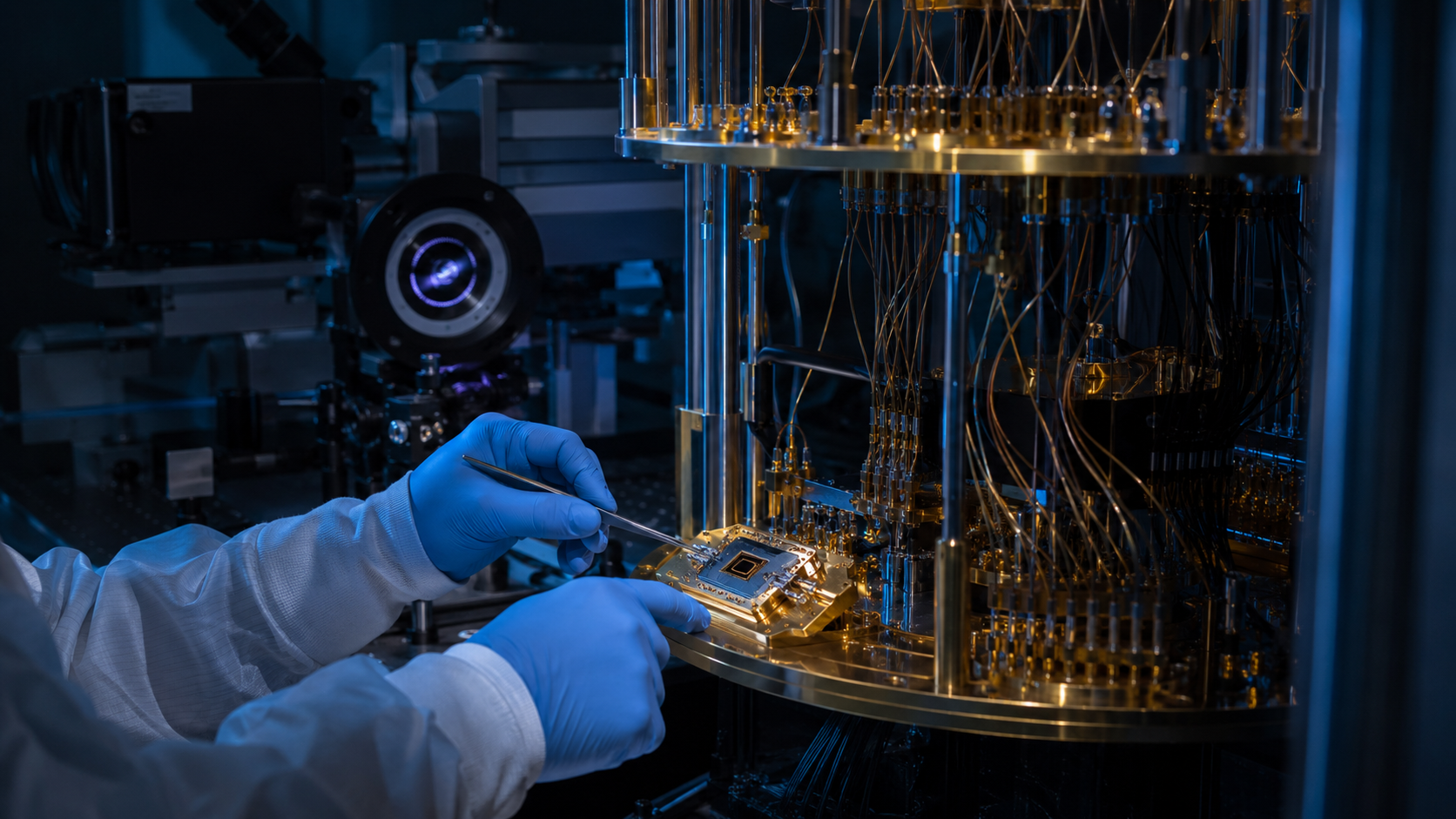
Quantum processors impose tight requirements on materials, interfaces, electrical noise, microwave control, thermal stability, and device-to-device uniformity. Small parameter changes can affect frequency, coupling, coherence, and control fidelity.
How can a processor be manufactured, integrated, measured, and calibrated as one coherent system?
Proposed research platform
QORIENTA’s proposed direction combines semiconductor-scale process research, advanced packaging, automated metrology, cryogenic characterisation, and device-aware calibration.
Semiconductor-compatible quantum device processes
Electrical, microwave, thermal, and material measurement
Separated quantum, control, and readout layers
Low-temperature assembly and system testing
Adaptive device fabrication
The concept proposes recording a device signature for each measured quantum element instead of assuming perfect identity. Frequency, coupling, readout response, control sensitivity, and observed error behaviour would become structured calibration inputs.
Three-dimensional integration
Functional separation may reduce routing pressure and make individual subsystems easier to manufacture, test, replace, and improve.
Control and validation
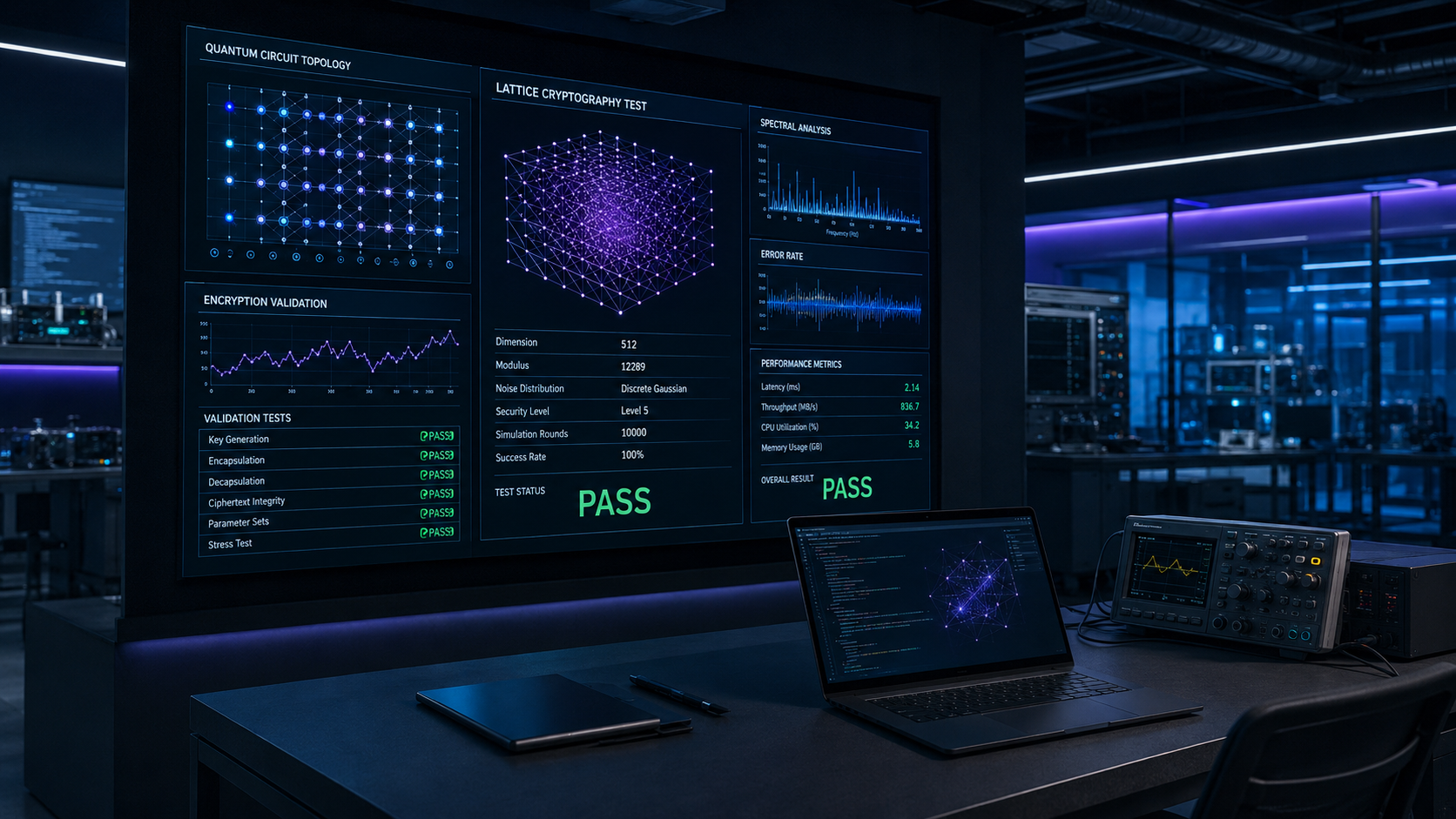
Every proposed subsystem requires independent measurement, documented test conditions, reproducible data, and clear failure criteria. Machine learning may assist anomaly detection, but it cannot replace physical measurement or independent verification.
Research questions
Which variations can be calibrated, and which require process redesign?
How can coupling and thermal effects be measured across integrated layers?
Which results remain stable across devices, assemblies, and independent tests?
Conclusion
The QORIENTA concept connects fabrication, packaging, cryogenic engineering, control, error management, and verification into one research direction. The next credible step is not a larger claim; it is a smaller, measurable experiment with public methods and independently reviewable results.
Evidence is the next milestone.
Future revisions should link methods, datasets, test conditions, limitations, and independent review when those materials become available.